
Last updated October 31, 2026
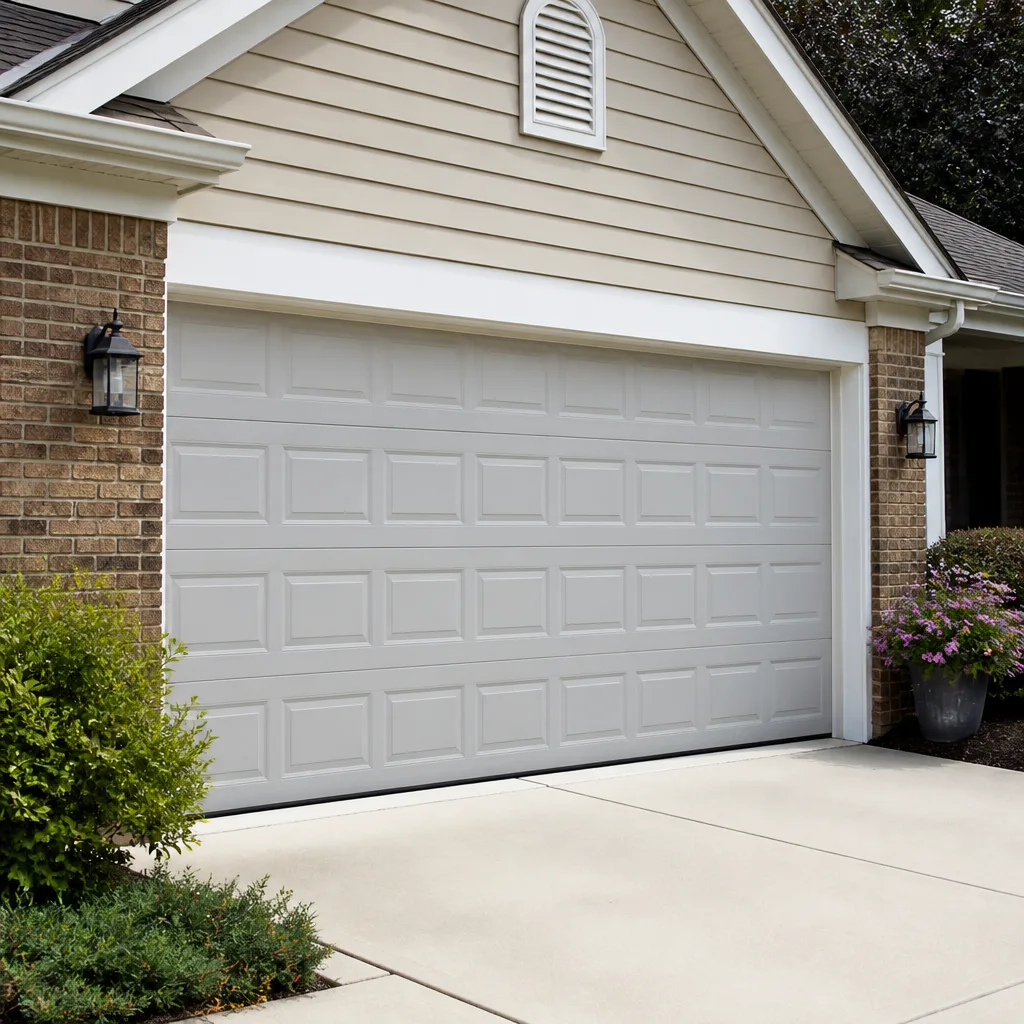 Raised-panel steel
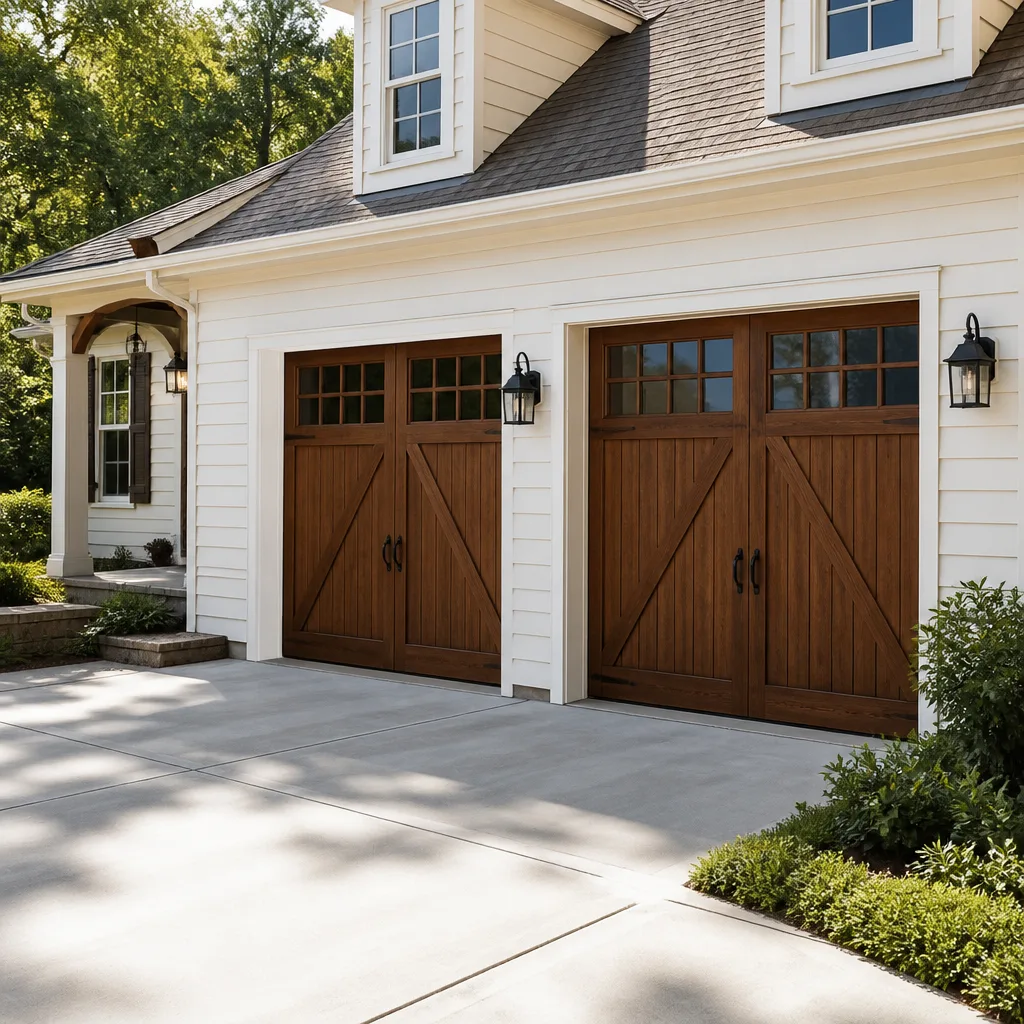 Carriage house
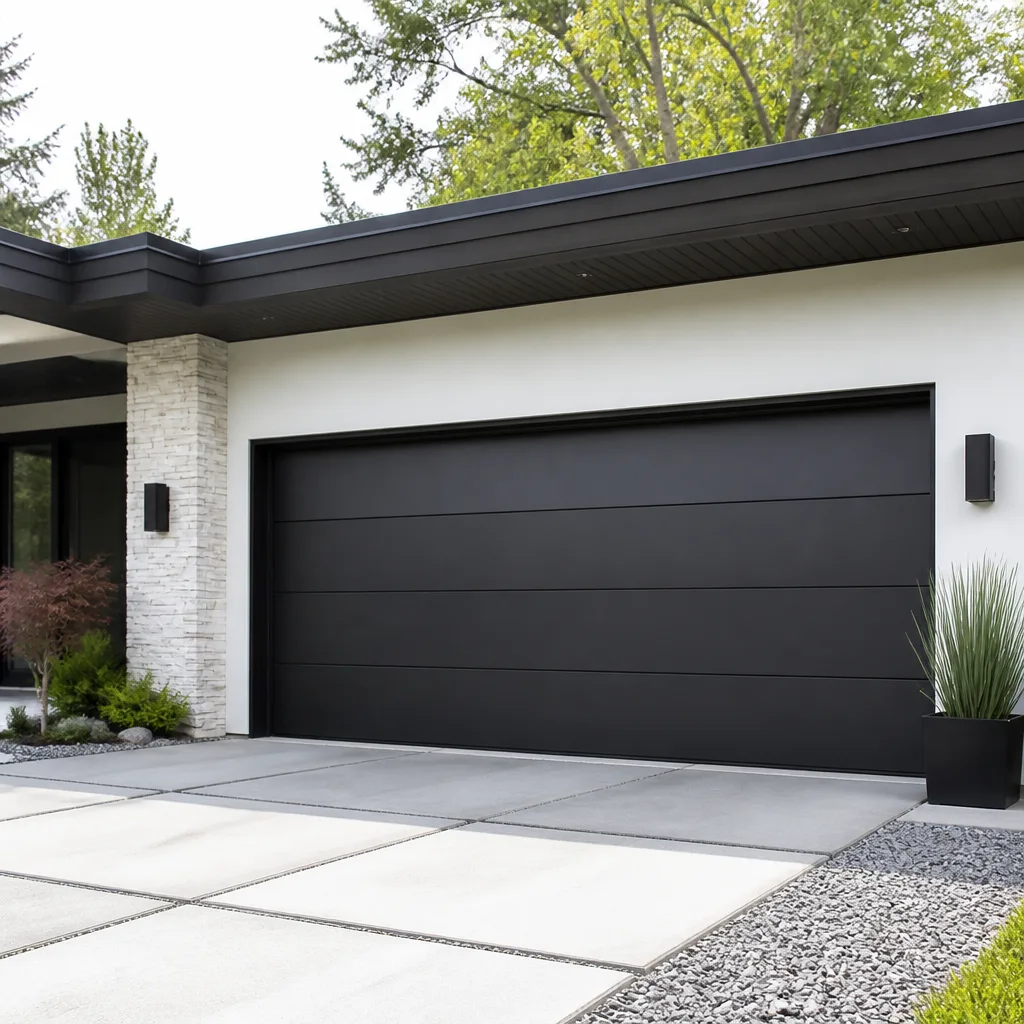 Modern flush
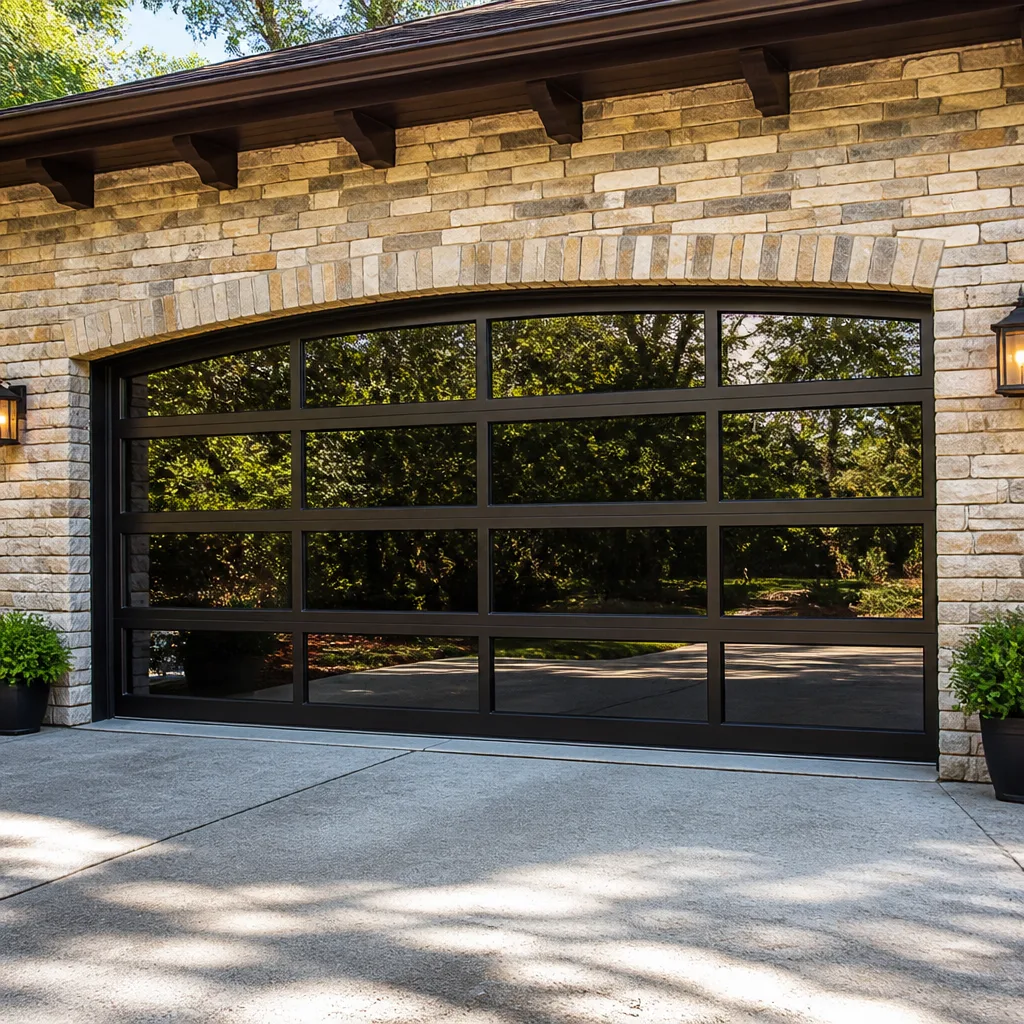 Full-view glass
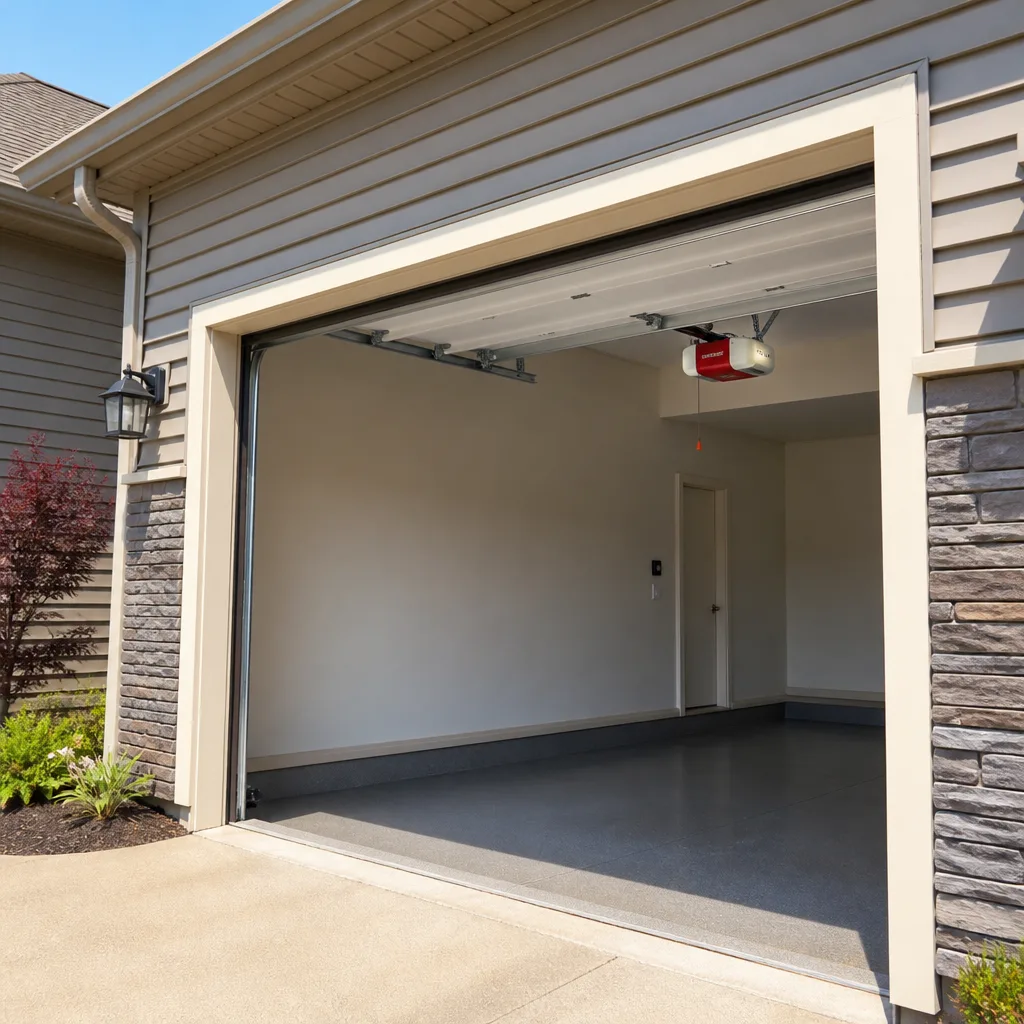 LiftMaster openers
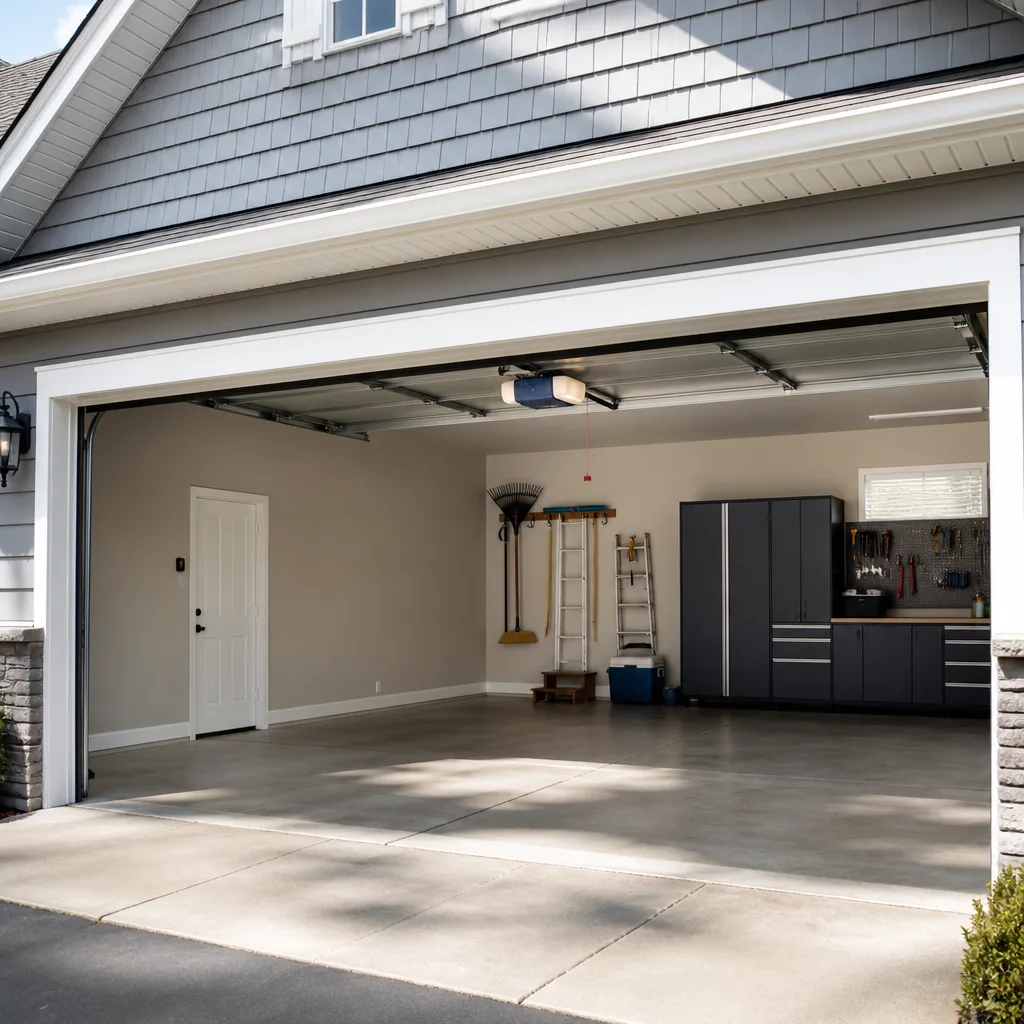 Chamberlain openers
Full 25-point door and opener safety check with every visit - springs, cables, rollers, tracks, and your LiftMaster or Chamberlain opener included
You get a price before we start. It does not change when the truck arrives.
Get your free estimateGarage Door Warning Signs: A Fort Myers Homeowner’s Reference Guide
Most garage door failures don’t announce themselves with a crash. They whisper for months first. A faint grind. A door that hesitates. A cable that looks slightly fuzzy. In Fort Myers, these whispers get drowned out by rain, humidity, and the general chaos of hurricane season prep. By the time a homeowner notices, the salt air has already done structural damage that a visual inspection from an out-of-state guide would miss entirely. This reference guide walks you through what every major warning sign actually means, which ones you can schedule around, and which ones mean stop using the door today. For more guides & resources, visit our blog.
Styles & brands we work with
Quick Answer
Garage door warning signs in Fort Myers fall into four categories: noise changes, movement irregularities, visible corrosion, and opener behavior. A grinding sound usually points to rollers or bearings; a popping sound means a spring is failing; hesitation on the way up often signals spring fatigue; and rust on hinges or cables is a structural countdown in a coastal climate. Any sign that involves springs, cables, or a door that won’t stay open is a safety issue requiring professional attention, not a weekend project.
Table of Contents
- Noise Diagnostics: What Squealing, Grinding, Popping, and Rattling Actually Mean
- Salt-Air Corrosion: The Fort Myers-Specific Warning Signs
- Why Your Door Moves Slowly: Opener vs. Spring vs. Track
- Immediate Safety Risks vs. Scheduled Repair Windows
- Warning Signs That Only Appear in Summer and Disappear in Winter
- Cable and Spring Warning Signs You Should Never Ignore
- Track and Roller Warning Signs That Start Small
- Opener Warning Signs Homeowners Misdiagnose
- Common Mistakes to Avoid
- When to Call a Professional
- Frequently Asked Questions
- The Bottom Line
Noise Diagnostics: What Squealing, Grinding, Popping, and Rattling Actually Mean
Your garage door talks. Most people just don’t speak the language. Each noise has a specific mechanical origin, and learning to distinguish them tells you whether you’re looking at a $40 roller replacement or a spring about to fail. Here’s the noise-to-component breakdown we use on service calls across Fort Myers:
Squealing or high-pitched metal-on-metal. This is nearly always the rollers. Rollers have bearings inside that eventually dry out, especially in a humid coastal environment. Once the bearing seizes, the roller stops rolling and starts sliding against the track. That’s the squeal. Left alone, a seized roller will grind a flat spot onto the track itself, which turns a cheap repair into a track replacement.
Grinding or coarse scraping. This is the one homeowners always blame on the opener. It’s rarely the opener. Grinding typically means the rollers have already seized and are now chewing into the track metal, or the door’s hinges have corroded and are scraping as panels flex. In Fort Myers, we see grinding most often on homes within two miles of the coast, where salt accelerates hinge corrosion.
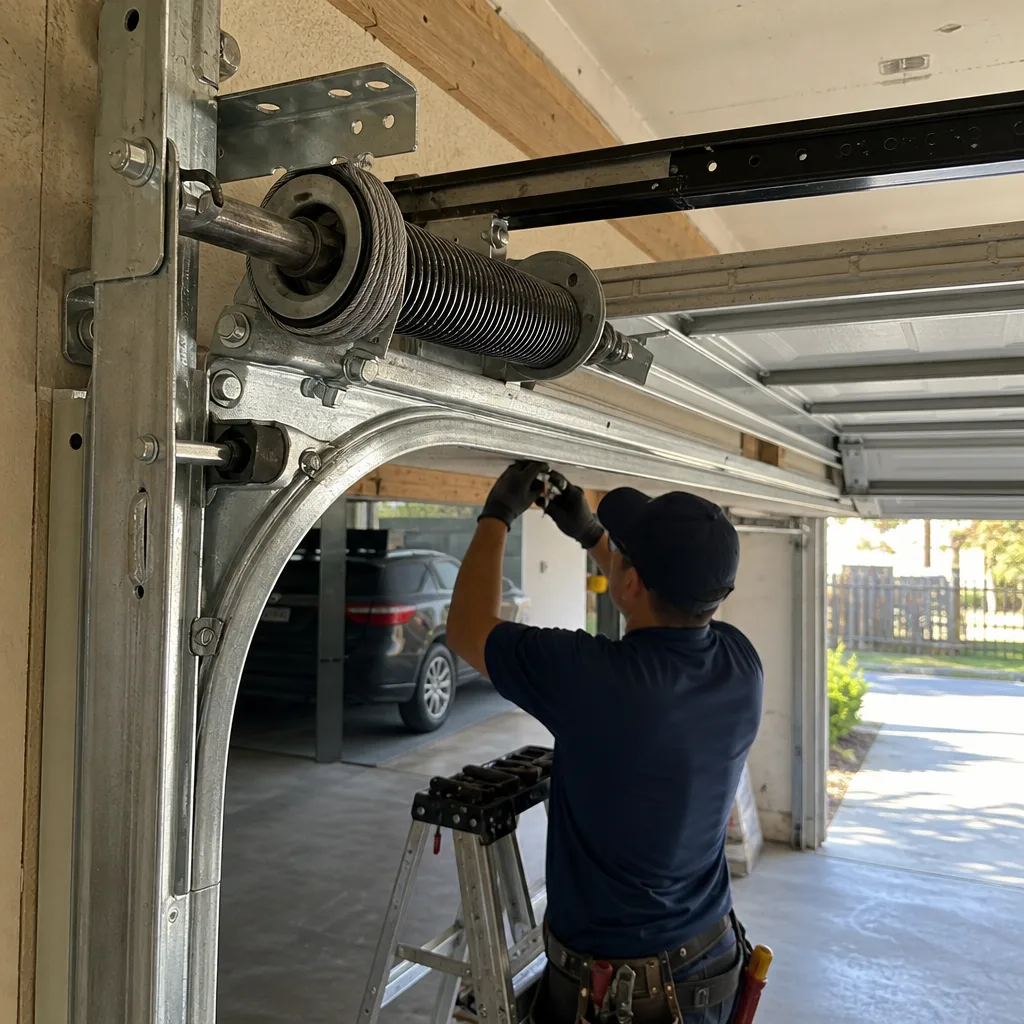
Popping or snapping during operation. This is a spring sound. Torsion springs store enormous tension, and as they age, the coils begin to bind and release. Each pop is a coil slipping. A popping spring is a spring in its final stage of life. If you hear popping, stop using the door and schedule a spring replacement. When a spring lets go completely, it releases all that stored energy at once.
Rattling or loose shaking. This usually means hardware has loosened: bolts on the hinges, the roller brackets, or the opener’s mounting points. Rattling is the least urgent sound, but it’s a sign the door is vibrating against itself. Over months, vibration accelerates wear on every component it touches.
We work on the brand you already have, and this matters for noise diagnosis. A Raynor door and a Clopay door use different roller materials. A LiftMaster opener drives differently than a Genie. Knowing the equipment before we arrive means we diagnose faster and order the right part the first time.
Salt-Air Corrosion: The Fort Myers-Specific Warning Signs
Generic garage door guides miss this entirely. They’ll tell you to look for rust. In Fort Myers, corrosion doesn’t always show up as the orange flakes you see on a Minnesota car. Our salt air creates a specific pattern of damage that’s easy to spot once you know what you’re looking at:
- White or chalky residue on hinges and brackets. This is aluminum oxidation. It looks like dried salt, and it is partially salt. But underneath the chalk, the hinge is losing material. What looks cosmetic is structural.
- Pitting on the bottom panel. The bottom panel sits closest to the ground and catches splash-back from rain. Pitting looks like tiny craters in the steel. By the time you see pitting, the panel’s integrity is compromised.
- Green discoloration around cable ends. Copper cable ends and brass fittings form verdigris. A green tint means the cable’s attachment point is corroding, which is exactly where cables fail.
- Hardware that’s turned dark brown or black. Steel fasteners in coastal air develop a dark oxide layer before they visibly rust. If your bolts look like they’ve been painted brown, they’re mid-corrosion.
- Rust on the track surface. This is important. Galvanized tracks resist rust for years, but once the galvanization scratches, salt gets under it. Rust on a track creates friction. Friction kills rollers.
The specific danger in Fort Myers is that corrosion starts inside components before it appears on the surface. A hinge can look fine on the outside while its internal pin has been rusting for two years. That’s the gap between “annoying noise” and “failed panel before a hurricane” that we mentioned. Salt air hides damage until it’s already structural.
When you call us for a Garage Door Repair in Fort Myers, we inspect the hardware you can’t see: the hinge interiors, the spring anchor brackets, the cable drums. Those are the failure points that catch homeowners off guard.
Why Your Door Moves Slowly: Opener vs. Spring vs. Track
A slow-moving garage door has three possible causes, and telling them apart before you call anyone saves you money and helps you describe the problem accurately. Here’s the step-by-step diagnostic we walk through with homeowners in Fort Myers:
- Disconnect the opener. Pull the red emergency release handle. Now lift the door manually. If it’s heavy or you can’t lift it past halfway, the springs are weak or failed. This is a spring problem, not an opener problem.
- Lift the door to halfway and let go. A healthy door with balanced springs stays in place. If it slowly drops, the springs are losing tension. If it doesn’t hold position, one spring may have already broken. This is the test that reveals spring fatigue before it becomes a full break.
- If the door lifts easily by hand but moves slowly with the opener attached, the opener is the likely culprit. Opener motors in Fort Myers work harder than they should because heat and humidity force them to pull against swollen weatherstripping and accumulating track debris. The motor might also be failing, especially if it’s more than ten years old.
- If the door moves freely but visibly rubs or shudders at one point in the track, you have a track alignment or roller problem. Look for a gap between the roller and the track on either side. A misaligned track drags the door and mimics the symptoms of a weak opener.
We see this misdiagnosis regularly. A homeowner in Fort Myers calls about a slow door, assumes the opener is dying, and buys a new LiftMaster or Chamberlain unit. Then the new opener strains against the same bad springs or misaligned track, and the problem returns. We service the full system, from the spring to the opener, which means we find the actual cause before recommending any replacement.
Immediate Safety Risks vs. Scheduled Repair Windows
Some warning signs are inconvenient. Others are dangerous. Here’s the distinction, based on the force and failure patterns we see in Fort Myers homes:
Immediate safety risks, stop using the door now:
- A visible gap or separation in a torsion spring. The spring is broken. The door now weighs its full, unsprung weight. The opener was never designed to lift that, and the cables can snap under the imbalance.
- A cable that’s frayed, unraveling, or off its drum. Cables hold tension from the springs. A cable failure while the door is moving can send the door down uncontrolled.
- A door that slams down from the open position. This means the springs are no longer counterbalancing the door’s weight. Each slam stresses every panel and hinge.
- Bolts or brackets that have pulled away from the door or the wall. The hardware is losing its anchor. When it goes, the door is no longer connected to anything.
Scheduled repair window, call within the week:
- Roller noise that’s gotten louder over a month. The rollers are failing, but the door remains safely suspended by the springs and cables.
- Slow opening or closing. This is wear and tear, not immediate failure, but it won’t fix itself.
- Loose hardware that rattles. Tightening is temporary; the cause is usually worn bushings or hinge wear.
- Rust on hinges or track surfaces. Structural but progressing slowly enough to schedule a service call.
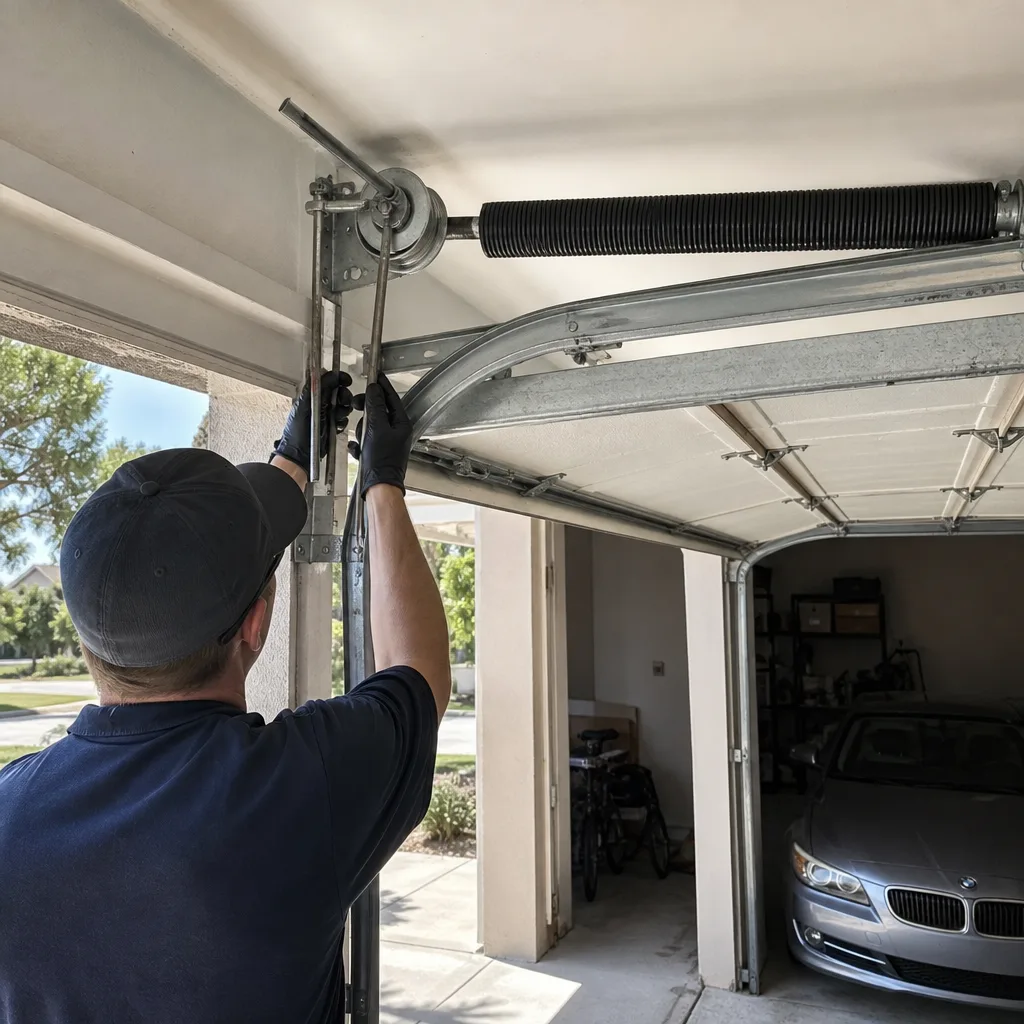
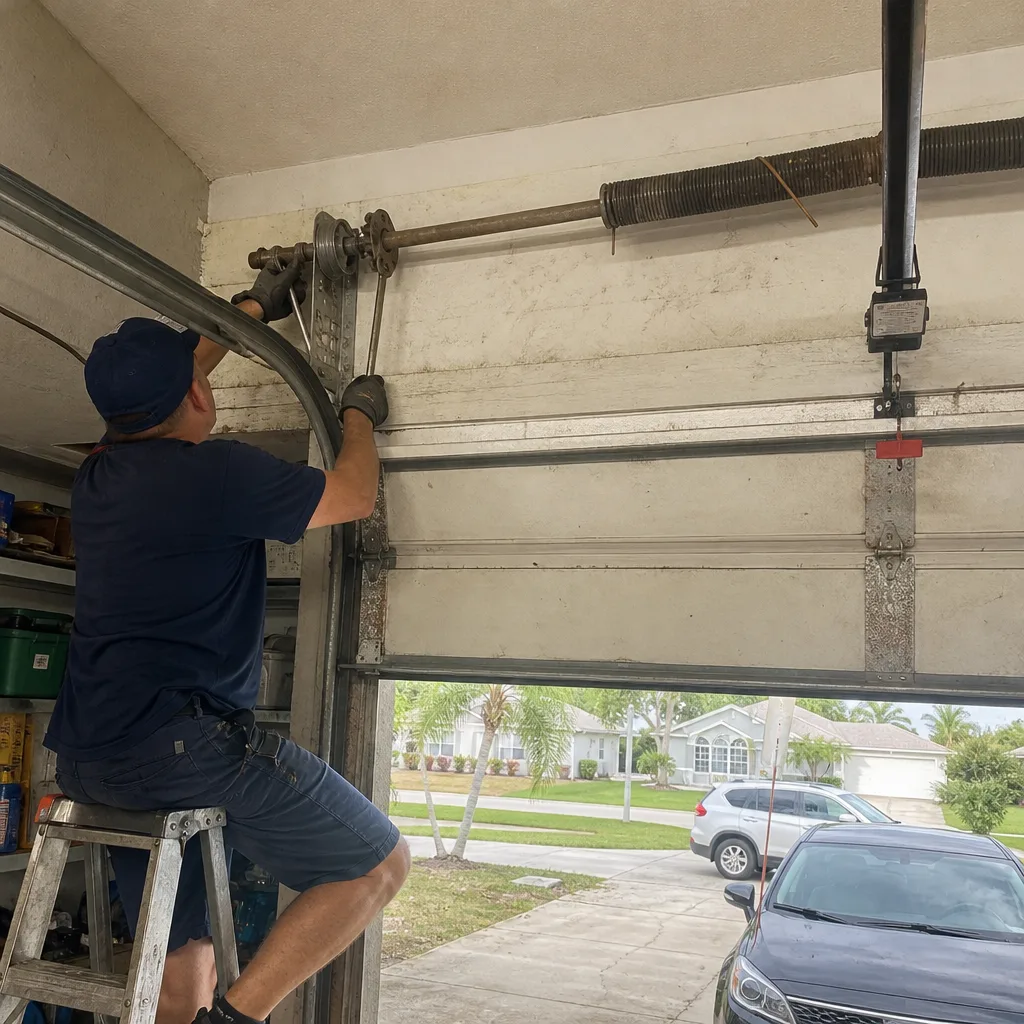
The tension on a torsion spring is measured in hundreds of pounds. We don’t give DIY advice for spring or cable work, and we don’t recommend anyone attempt it. The danger is not theoretical. A spring that releases unexpectedly can break bones or worse. That’s why this section draws a hard line: springs and cables are professional-only work. Call us instead.
Warning Signs That Only Appear in Summer and Disappear in Winter
Here’s a Fort Myers-specific pattern that confuses homeowners: certain warning signs show up in June, vanish in January, and get ignored because “it fixed itself.” It didn’t fix itself. It’s cycling with the climate. For a full breakdown of what to watch for each season, see our guide to Seasonal Garage Door Care for Fort Myers: Year-Round Homeowner’s Guide.
Summer door hesitation. Heat makes metal expand. In August, your track expands slightly, your rollers fit tighter, and the door moves sluggishly. Come January, the metal contracts and the door moves smoothly again. The problem is that a door already tight in summer has no tolerance left. When the track eventually warps or a roller seizes, you won’t get a warning phase. You’ll get a door stuck halfway open. If your door hesitates in summer, the clearance issue is permanent; it’s just only visible when the metal expands.
Summer opener strain. Fort Myers is hot. Really hot. Garage interiors regularly hit 110 degrees in July. Opener motors overheat, capacitors degrade faster, and circuit boards develop hairline solder fractures from repeated thermal expansion. An opener that works fine in January and trips its thermal overload in August is telling you its components are degrading. Replacing the opener in the “cool” season, when it appears to work, prevents a summer failure entirely.
Summer weatherstripping drag. Humidity swells rubber and vinyl. The bottom seal and side seals absorb moisture and expand, which creates drag on the door’s travel. In dry winter months, the seals shrink back. Cyclic swelling eventually deforms the seals permanently, and one July you’ll notice the door scraping noticeably coming down. Replacing weatherstripping every four to five years in Fort Myers’s climate keeps the door moving cleanly in every season.
We’ve seen this cycle repeat on doors from every manufacturer, including Clopay and Amarr panels with their standard hardware. The brand of door doesn’t matter. The Gulf Coast climate does.
Cable and Spring Warning Signs You Should Never Ignore
We covered the sounds. Now let’s talk about the visual signs, because cables and springs give clear visual warnings before they fail. Most homeowners just never look at them.
Spring warning signs:
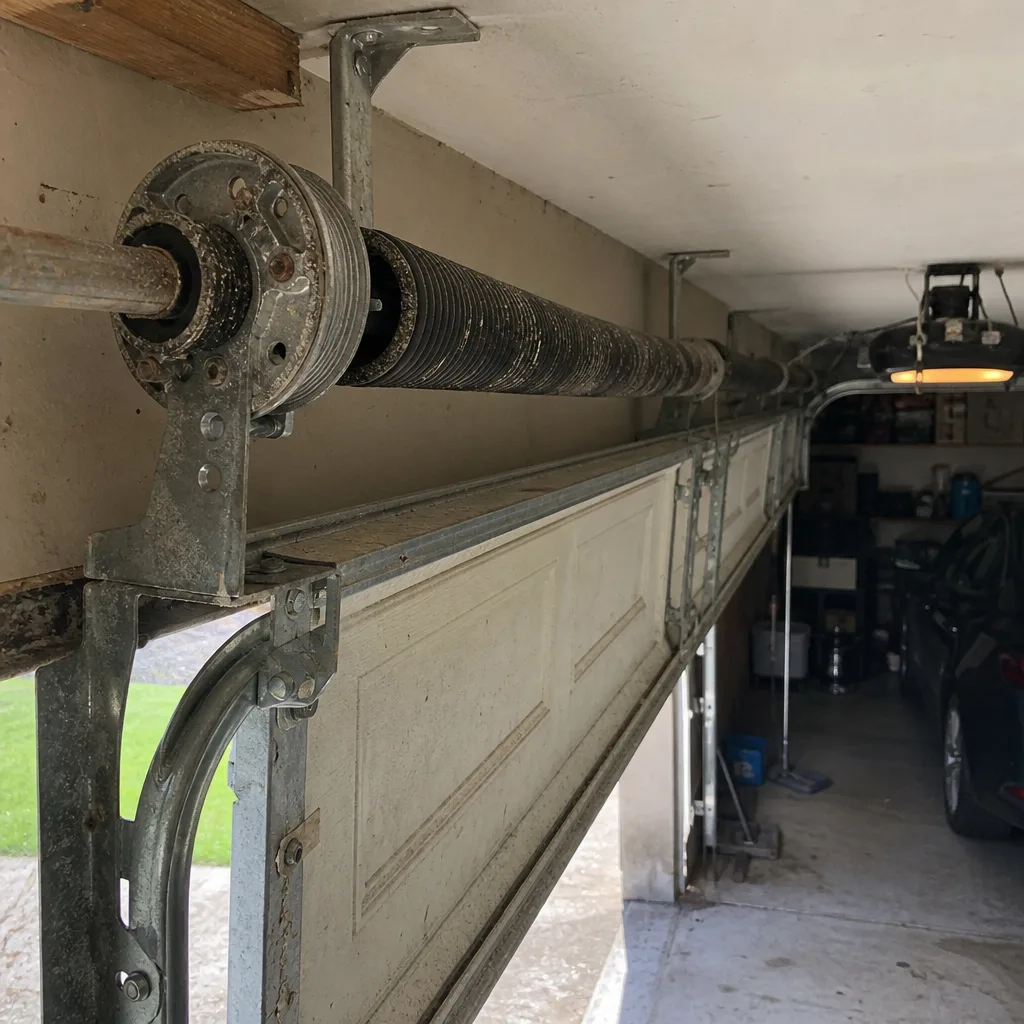
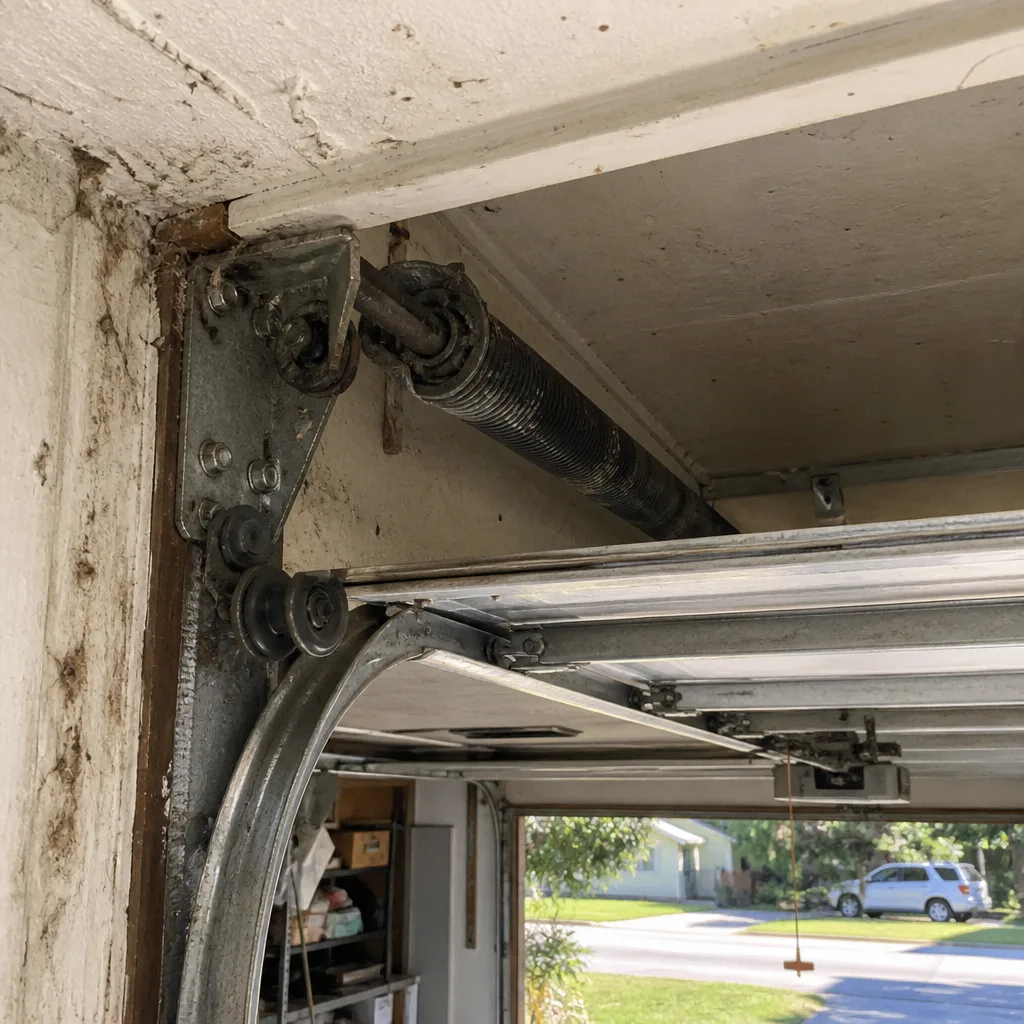
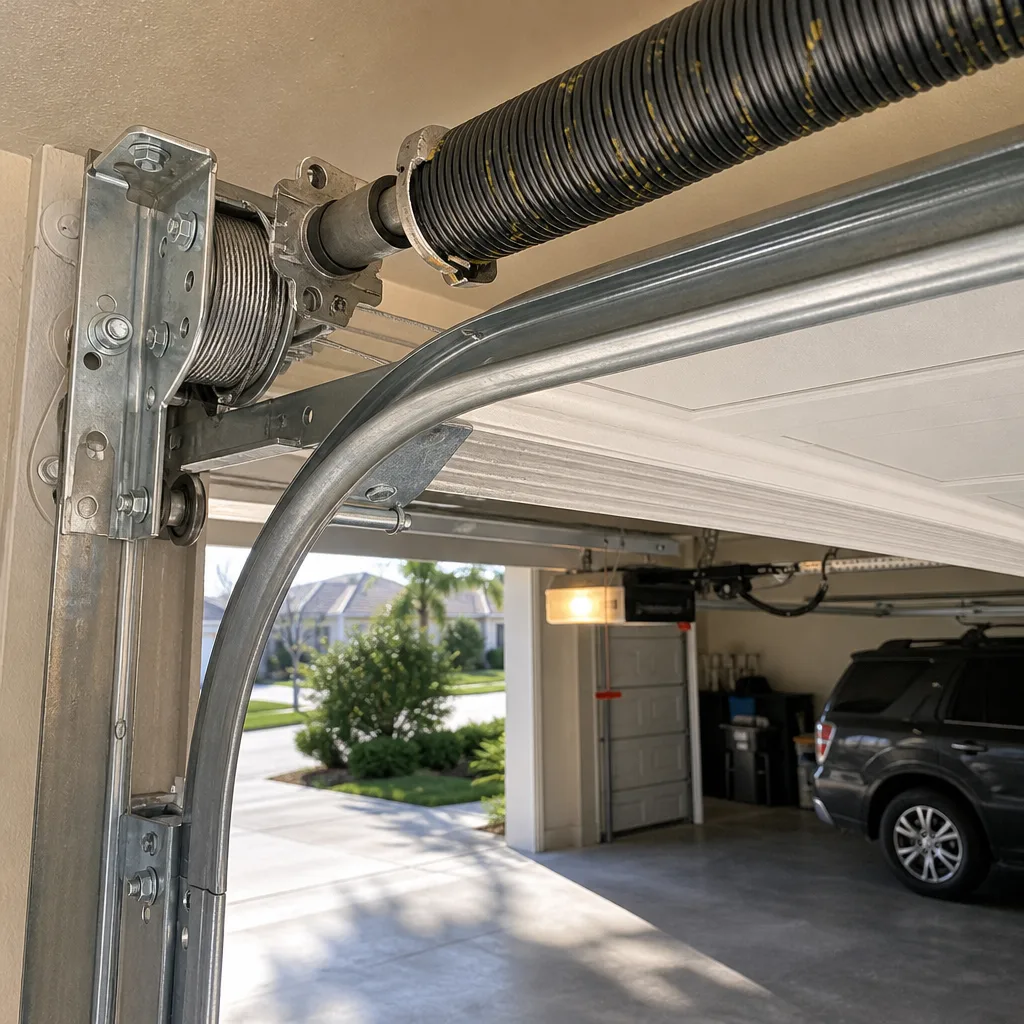
- Gaps between coils that weren’t there before. A torsion spring under tension should have tight, uniform coils. A visible gap means the spring has taken a permanent set and is losing force.
- Two springs where one looks shorter than the other. Torsion systems use matched pairs. If one spring has lost more tension than the other, it may have fewer effective coils. The door is now unevenly balanced.
- Shiny wear marks on the spring. Where the coils rub against each other or against the shaft, the galvanization wears away. Shiny metal is exposed steel, and exposed steel rusts.
Cable warning signs:
- Fraying anywhere along the cable length. A single broken strand multiplies quickly once the cable is under everyday tension.
- A cable that’s slack or loose when the door is closed. Cables should be taut at all times. Slack means the cable has slipped off its drum or the spring has lost its ability to tension the system.
- Visible rust on the cable. Galvanized cables resist rust for a long time, but once the coating is compromised, the internal strands corrode from the inside and become invisible until they break.
These are not try-to-fix-it-yourself items. Torsion spring systems store enough energy to cause serious injury or death if mishandled. We say this plainly because every week someone watches a video and tries. Don’t. We carry springs and cables in our trucks for all major door systems, including Raynor and Wayne Dalton-specific hardware, and our technicians do this work under controlled conditions every day.
Track and Roller Warning Signs That Start Small
Track and roller problems are the most common issue we find on Garage Door Installation in Fort Myers follow-ups and repair calls. They start tiny and compound.
Roller warning signs:
- Flat spots. Run your finger along the roller wheel (door closed, power disconnected). A round roller should roll. A roller with a flat spot thuds its way along the track and creates shock loads on the hinges and panels.
- Side-to-side play. Grab a roller stem and try to wiggle it. Movement means the bearing inside is worn. The roller is no longer guiding the door squarely, which accelerates track wear.
- Worn stems. The stem is the metal post that connects the roller wheel to the hinge. If the stem shows bright wear rings, it’s been moving inside the hinge tube, which means the hinge is wearing too.
Track warning signs:
- Kinks or dents in the vertical or horizontal track. Even a small dent becomes a pinch point for the roller. The door jolts each time it passes the dent.
- Track that’s pulled away from the wall or ceiling brackets. Look for daylight between the track and the bracket. Loose track moves under load and changes the door’s travel path.
- Wear grooves on the track’s rolling surface. The track should be smooth. A groove means metal has been displaced, which means the roller is carving its own path instead of following the track.
Rollers and tracks are wear parts. They’re consumable. In Fort Myers’s humidity, we recommend inspecting rollers every two years, and replacing them when the first signs of bearing wear appear. It’s a small cost relative to a replacement panel or a new track run.
Opener Warning Signs Homeowners Misdiagnose
We dedicated an entire section to openers because they’re the most misunderstood component of the door system. A Garage Door Opener Repair in Fort Myers call often starts with the homeowner describing a problem that isn’t the opener at all. Or the opposite: a problem that is the opener, but the homeowner blames the door.
The opener is not the problem when:
- The door is heavy to lift manually. Openers are not designed to lift the full weight of the door. If a spring fails, the opener strains and may trip its overload. It’s doing its job by shutting off.
- The door is noisy but operates. The opener just moves the door. Noise comes from the door hardware. Replacing the opener won’t change a seized roller.
- The door reverses before it hits the floor. The safety sensors or the force limit are engaged. The opener isn’t failing; it’s sensing resistance that shouldn’t be there, usually from track binding or a seal that’s snagged.
The opener is the problem when:
- The motor runs but the door doesn’t move. The drive gear or belt is stripped. This is an internal opener failure.
- The door stops randomly mid-travel, then starts again fine. This points to a failing logic board or a thermal overload, both common in Fort Myers garages that stay above 100 degrees in summer.
- The opener works from the wall button but not the remote, or vice versa. This is a signal or receiver issue, not a door problem.
- The opener hums but sounds weak. Capacitors degrade, especially in heat and humidity. A weak hum means the motor is not getting a full start jolt.
We stock parts for all major opener brands: LiftMaster, Chamberlain, Genie, and Raynor. Opener repair is a dedicated service at Diamond Garage Door Co, not an afterthought. That matters when the problem is a specific circuit board revision or a discontinued drive gear.
Common Mistakes to Avoid
- Lubricating a noisy door without diagnosing the noise. Grease masks the sound. It doesn’t fix a seized roller bearing or a failing hinge. In fact, heavy grease on corroded hardware in Fort Myers’s humidity attracts grit and accelerates wear.
- Assuming a slow door means the opener is dying. We covered this above, but it’s the single most common misdiagnosis we see. Disconnect the opener and test the door manually before replacing anything.
- Ignoring summer-only symptoms. A door that hesitates in August and works in January has a clearance problem that will eventually fail permanently. Fix it during the “working” season.
- Painting over rusted hardware. Paint hides surface rust but does nothing for corrosion inside the hinge pin or the cable drum. It gives you false confidence while the structural damage continues.
- Tightening loose bolts without addressing the cause. Loose hardware is usually loose because something is vibrating, worn, or misaligned. Tightening is a bandage, not a repair.
- Using WD-40 on springs and rollers. WD-40 is a solvent, not a lubricant. It strips the protective coating and leaves the metal exposed. In Fort Myers’s salt air, that’s an invitation for corrosion.
- Waiting for a “convenient time” to address spring wear. Springs don’t fail on a schedule. They fail when they’ve cycled their last cycle. If you hear popping or see a gap in the coils, the convenient time is now, before the door comes down hard one afternoon.
When to Call a Professional
You can watch for warning signs. You can diagnose noises. You can test spring balance. But when it comes to fixing what you’ve found, springs, cables, and track alignment are professional work. The components are under high tension, and a mistake during repair can turn a $200 fix into a hospital visit or a new door.
Call a professional when you hear popping from a spring, see a frayed cable, notice your door is heavy to lift manually, or spot corrosion on structural hardware that’s moved beyond surface discoloration. Call before hurricane season, not during it. The week before a storm, every garage door company in Fort Myers is booked solid, and a door that won’t close is a house that’s not protected. Diamond Garage Door Co offers free estimates in Fort Myers. Call (866) 472-5684 to schedule one.
Frequently Asked Questions
Garage door spring replacement in Fort Myers typically runs between $180 and $340 depending on the spring type and the door’s weight. Torsion spring systems cost more than extension spring systems because the hardware is more complex. The price includes the spring, installation labor, and a balance check. We quote the exact price, agreed before we start any work, so there are no surprises on the invoice. Call (866) 472-5684 for a free estimate on your specific door.
A grinding noise almost always means the rollers have seized and are scraping against the track, not that the opener is failing. Once a roller bearing seizes, the roller stops turning and slides along the track surface, creating that coarse grinding sound. Left alone, it will damage the track and turn a small roller replacement into a larger track repair. We carry rollers for all the major door brands we service, so the fix is usually same-day when you call us.
For emergency situations like a broken spring, a snapped cable, or a door that’s stuck open, we prioritize same-day calls in Fort Myers. The fastest way to get on the schedule is to call (866) 472-5684 directly and describe what happened. Our trucks carry springs, cables, and rollers for the common brands, which means we can often complete the repair on the first visit.
No. We quote a fixed price before any work begins, based on what you’ve described and what we find during the inspection. If the door requires additional parts, we explain the cost before ordering anything. You approve the total before we touch a wrench. This is how we’ve always worked, and it’s one of the reasons Fort Myers homeowners call us back for their next repair.
We stock parts for all eight major brands we service: LiftMaster, Chamberlain, Genie, Clopay, Amarr, Wayne Dalton, Craftsman, and Raynor. If you own a door from one of these brands, the parts we need are likely on the truck when we arrive. If you own something less common, we source the part and return to complete the repair, with no additional trip charge.
Not necessarily. Noise alone is almost always fixable with new rollers, hinges, or a track adjustment. Most noisy doors in Fort Myers have years of serviceable life left. Replacement becomes the answer when the panels are structurally damaged, the track is bent beyond alignment, or corrosion has eaten through the door’s framework. A repair-first evaluation beats a replacement quote every time, and that’s how we approach every inspection.
Failing garage door springs announce themselves with popping sounds during operation, visible gaps between coils, and a door that’s noticeably heavier when you lift it manually. If you lift the door to the halfway point and it falls instead of holding, the springs have lost tension and need replacement before the door fails completely. Springs wear out based on cycles, not years, so a door that’s opened four times a day has a shorter spring life than one that’s opened once a day.
The Bottom Line
Your garage door is a mechanical system living in one of the most corrosive climates in the country. Warning signs in Fort Myers are amplified by salt air, intense summer heat, and seasonal humidity. A noise you ignore in June becomes a failure in September. A hinge that looks fine on the outside is rusting from the inside. The good news is that every major problem gives you warning. Squealing, grinding, popping, heavy manual lifting, summer hesitation, white chalk on hardware: these are all signals with clear meanings. When you catch them early, the fix is usually small. When you don’t, the failure is expensive and often happens at the worst possible time.
Written by the team at Diamond Garage Door Co, serving Fort Myers since 2016.
See the difference
 Before
 After
 Before
 After
 Before
 After